
The Pakistan Hockey Federation (PHF) has confirmed that the government has released funds for the national team's participation in the FIH Nations League and the FIH World Cup. However, player Abdul Hannan Shahid has raised concerns about low daily allowances and lack of financial support for players.

Muhammad Shoaib overcame immense challenges to win an ITF Futures title in Islamabad, ending Pakistan's 20-year wait for a singles title in international tennis.

Pakistan has increased security measures in Islamabad and surrounding areas as the US and Iran prepare for another round of peace talks. The move follows an announcement by former US President Donald Trump that American negotiators would be in Pakistan for discussions aimed at resolving the conflict between the two nations.
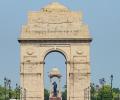
Sources reveal that Pakistan's ISI allegedly planned attacks on a Delhi temple, a highway dhaba, and a Haryana military camp through operatives linked to the Shahzad Bhatti module.
Pakistan is hosting a quadrilateral summit of foreign ministers from Saudi Arabia, Egypt, and Turkiye to discuss the conflict in West Asia and explore avenues for peace. The summit includes discussions on regional developments and meetings with Prime Minister Shehbaz Sharif.
Police have invoked the stringent Unlawful Activities (Prevention) Act (UAPA) against 21 people apprehended for alleged involvement in a Pakistan-linked espionage racket. The suspects are accused of passing sensitive information to a Pakistan-based handler through social media and other means.

Pakistan's Foreign Minister Ishaq Dar met with his counterparts from Egypt and Turkiye in Islamabad ahead of a quadrilateral summit, including Saudi Arabia, to discuss the ongoing conflict in West Asia and explore avenues for peace.

Foreign Ministers from Saudi Arabia, Egypt, and Turkiye convene in Pakistan for a summit aimed at de-escalating the ongoing conflict in West Asia, with Pakistan actively seeking to broker peace through dialogue and diplomacy.
Pakistan is set to host a quadrilateral summit of foreign ministers from Saudi Arabia, Egypt, and Turkiye to discuss the ongoing conflict in West Asia and explore avenues for peace negotiations.

A Pakistani terrorist, tasked with executing attacks for Lashkar-e-Taiba in Jammu and Kashmir, surprisingly paused his mission to fulfil a personal desire: undergoing a hair transplant in Srinagar.
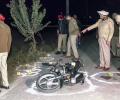
Five labourers from Pakistan's Punjab province were injured in a grenade attack in Balochistan. The attack occurred in the Chagai district when assailants targeted a building housing labourers. Security forces also responded to unprovoked firing from across the border in the Chaman area, destroying multiple Afghan Taliban posts.

Egypt, Pakistan, Saudi Arabia and Turkey met in Islamabad in what analysts say is the formal opening of a new diplomatic formation that could reshape the post-war regional order. Their immediate goal is a ceasefire; their larger ambition is to ensure that neither Iran nor Israel emerges from this war in a dominant position. Pakistan's foreign minister then flew directly to Beijing and mooted a Chinese role as guarantor of any eventual agreement. Prem Panicker continues his must read daily blog on the Gulf War.

Following two blasts targeting the Eastern Dedicated Freight Corridor in Punjab, the Railways Ministry is intensifying security measures, including increased patrolling, expanded surveillance, and drone deployment, to safeguard railway infrastructure and prevent further disruptions.

The Pakistan government has revoked the two-year ban imposed on national hockey team skipper Ammad Shakeel Butt by the Pakistan Hockey Federation (PHF), deeming the ban illegal and unconstitutional. This decision follows Butt's criticism of the PHF's mismanagement during the recent Australia tour, which led to logistical nightmares for the team.

The broader conflict in West Asia, the largest international market for Indian carriers, has forced a sharp reduction in daily flights relative to the summer schedule.

The Pakistan hockey team faced a severe accommodation crisis in Canberra after their hotel bookings were cancelled due to the Pakistan Hockey Federation's failure to pay the bill. Players were left stranded and forced to find alternative solutions.
The Pakistan Hockey Federation (PHF) is under scrutiny after the Pakistan Sports Board (PSB) confirmed providing over 10 million rupees for the national team's hotel accommodation in Australia, which was allegedly not arranged, leading to significant difficulties for the team.

Pakistan Hockey Federation president Tariq Bugti has resigned following a controversy surrounding the national team's accommodation during their tour of Australia. b

Navy Chief Admiral Dinesh K Tripathi revealed that the Indian Navy was on the verge of striking Pakistan during Operation Sindoor following the Pahalgam terror attack, but kinetic actions were stopped. He also discussed the impact of the West Asia conflict on maritime traffic.
A year after the deadly terror attack in Pahalgam, India remembers the victims and reaffirms its commitment to fighting terrorism. Families of the deceased mourn their loss, while political leaders reiterate the nation's resolve to stand united against terror.

...reopen for up to six months. Until then, the Strait stays nearly closed. The world pays. And no one, including the man who started this, can say when it ends, notes Prem Panicker in his must read blog on the Iran War.
A pay dispute hit Pakistan hockey as some senior players threatened to boycott the men's FIH Pro League second phase in February.

The US Central Command (CENTCOM) announced the start of operations to clear mines in the Strait of Hormuz, a claim swiftly denied by Iran, leading to increased tensions in the region amidst stalled negotiations between the two countries.

After losing his central contract and slipping down the pecking order, Ishan Kishan rebuilt his game and mindset through discipline, meditation and domestic grind - culminating in a defining performance against Pakistan.

Raghu Rai, one of India's most celebrated photographers, passed away at a private hospital in New Delhi at the age of 83. He is survived by his wife, son, and three daughters.

Pakistan's Prime Minister Shehbaz Sharif has offered to host talks between the US and Iran to help resolve the ongoing conflict in the Middle East, following reports of Pakistan's involvement in backchannel diplomacy.

'A genuine tribute to Dr Ambedkar does not lie in selective invocation. It lies in asking a harder question: Is the Constitution still doing its job -- restraining even assertive majorities?' asks Manoj Mohanka.

The delegations from the US and Iran head to Islamabad on Friday, carrying a ceasefire that is already fraying, a Strait that is technically open and practically closed, and a negotiating agenda that would challenge even parties actually negotiating in good faith, which these groups are not. Prem Panicker continues his must read blog on the Iran War.

Both sides have now revealed a preference for escalation over strategic defeat, and each new provocation narrows the space for the next pause. The Touska seizure, Iran's refusal to negotiate under blockade, Israel's strikes on Iranian oil infrastructure -- all of these add up to an increasingly untenable situation. This makes the wild card -- Trump and his motormouth -- more consequential than ever, notes Prem Panicker in his must read blog on the Iran War.

The LPG squeeze on India's restaurant sector is the quotidian face of a deeper crisis.

The core issues to be settled -- access to Hormuz, Israel's aggression in Lebanon, the question of Iran's nuclear programme, sanctions relief and compensation -- are thorny enough to require weeks of patient negotiation. The most likely outcome of the opening sessions is that both sides take the measure of each other, establish what is and is not negotiable, and return home without having broken anything. That would count as progress.

The question is whether the clocks allow enough time for two deeply mistrustful sides to get there, and whether the surface calm holds long enough for the paddling to produce something before the ceasefire ends on April 22, notes Prem Panicker in his must read blog on the Iran War.

The cost of the war is being counted not in the corridors of power in Washington or Tehran, but in Firozabad's darkened furnace rooms, Howrah's idle casting sheds, and a barbershop in Kochi where the wait is suddenly, inexplicably, an hour long, notes Prem Panicker in his must read blog on the Iran War.

'In such a scenario, Iran could proclaim itself victor, rebuild, re-enforce its diminished regional proxies to further destabilise neighbouring nations and take control of the Persian Gulf and Strait of Hormuz.'

This weekend, Donald Trump has begun to say the quiet part out loud -- that he wants to take control of Iran's oil, a formulation more in line with his robber-baron style of international relations.

'The next two to three weeks will not be decided in Washington.' 'They will be decided in Tehran, in whatever calculation Iran makes about the costs of continued resistance against the costs of appearing to have yielded.'

'Was the five-day pause ever meant to hold, or was it simply another instrument of signaling, of positioning, of buying time in a war where even the pauses are tactical?' asks Prem Panicker in his must read daily blog on the Gulf War.

The United States, which entered this war in expectation of a short, sharp win along the Venezuela model, is now preparing for deeper involvement in a conflict it does not fully control, without the allies it typically relies on, against an adversary that is not behaving as expected, in a global environment that is already absorbing economic shock. Prem Panicker continues his must read daily blog on the Gulf War.

The pause gives the US time to breathe, to regroup, to move its expeditionary force into position without risk of interception along the way. It gives Iran nothing -- on the ground, attacks against its infrastructure continue apace. Prem Panicker in his must read daily blog on the Gulf War.

Iran is fighting a different war: Older, slower, and in some ways more dangerous. Iran doesn't need to shoot down an F/A-18. It only needs to make the Strait of Hormuz feel dangerous long enough for insurance markets, shipping companies, and oil futures traders to do the rest. Prem Panicker continues his must-read daily blog on the war in the Middle East.
 © 2026 Rediff.com - Advertise with us - Disclaimer - Privacy Policy - Sitemap - Feedback - About us - Terms of use - Grievances